Recursion - Problems Within Problems
14 / 15
What Is Recursion?
"An approach to solving problems that breaks a complex problem down into smaller, self-similar copies of itself until it reaches a simple base case—then cascades the answers back up."
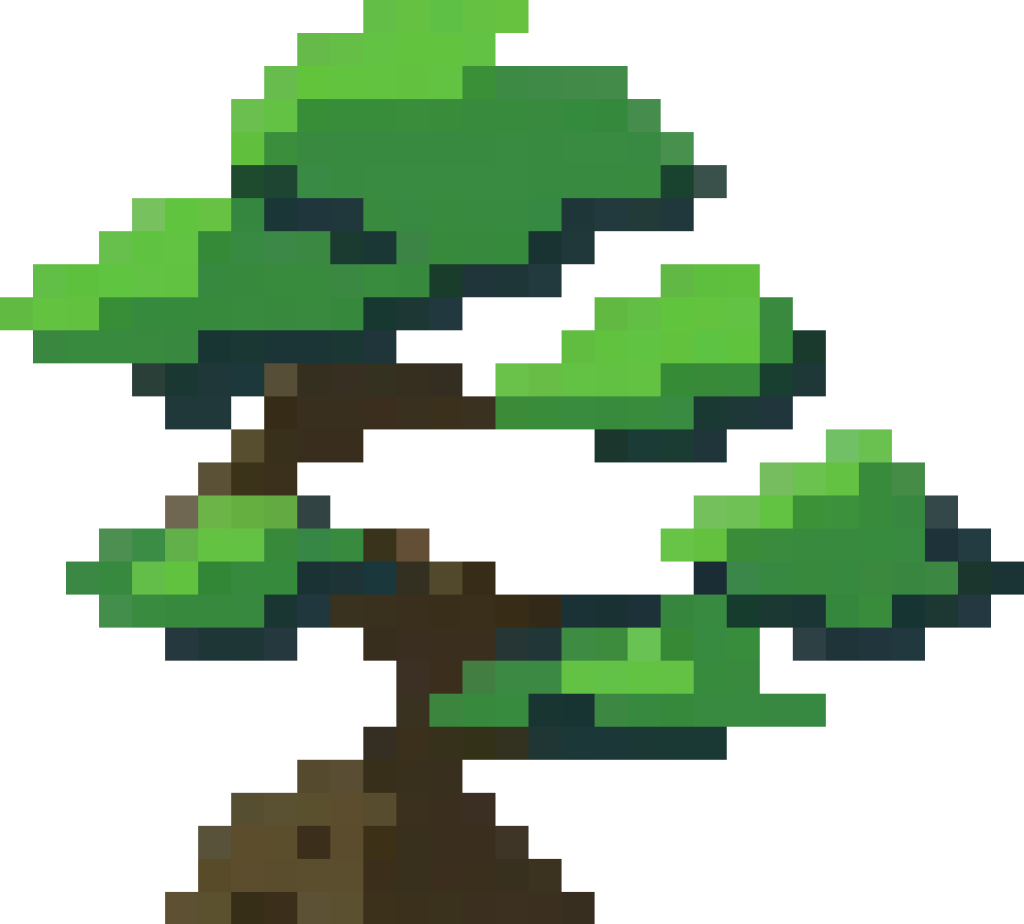
Nature's Recursive Fractal: The Bonsai Tree
Look closely at a bonsai tree: its main trunk splits into branches, each branch splits into smaller twigs, and each twig looks like a miniature tree—until finally reaching a single leaf (the base case where branching stops!).
The Recursive Mindset
Calculating
factorial(5) = 5 × 4 × 3 × 2 × 1
↓ 1. Call Stack Descent (Calling)
factorial(5) = 5 × factorial(4)
factorial(4) = 4 × factorial(3)
factorial(3) = 3 × factorial(2)
factorial(2) = 2 × factorial(1)
factorial(1) = 1 (BASE CASE!)
↑ 2. Base-Case Return Cascade (Returning)
factorial(1) → returns 1
factorial(2) = 2 × 1 → returns 2
factorial(3) = 3 × 2 → returns 6
factorial(4) = 4 × 6 → returns 24
factorial(5) = 5 × 24 = 120
Critical Rule: Without a reachable base case, recursion never stops—leading to a
RecursionError (stack overflow)!
Interactive Recursion Call-Stack Visualizer
Enter a number and click "Trace Call Stack"
Result will appear here
CORE LAWS & CODE Three Laws of Recursion & Python Implementation + Explore
1. Base Case
A simple problem answered directly without further recursion.
if n == 1: return 1
2. Move Toward Base
Every step must shrink the input closer to the base case.
factorial(n - 1)
3. Recursive Call
The function calls itself to solve the smaller sub-problem.
return n * factorial(n - 1)
def factorial(n):
    # 1. BASE CASE - stop condition (the leaf of the bonsai)
    if n == 1:
        return 1

    # 2. RECURSIVE CASE - call itself with a smaller input (n - 1)
    return n * factorial(n - 1)

result = factorial(5)  # 120
DEEP DIVE When to Use Recursion in Real Systems + Explore
- Tree & folder structures: Navigating nested directories, HTML DOM trees, or family trees
- Divide and conquer: Breaking a large puzzle into smaller identical puzzles (Merge Sort, Quick Sort)
- Mathematical sequences: Factorials, Fibonacci numbers, fractal geometry
- Self-similar problems: Whenever a problem is naturally defined in terms of smaller versions of itself

Twin Sunflowers Collected! (15 / 16)
You've conquered every core concept from variables to recursion! Turn to the final card to celebrate your full 16-flower garden and claim your printable Certificate of Mastery.
You've conquered every core concept from variables to recursion! Turn to the final card to celebrate your full 16-flower garden and claim your printable Certificate of Mastery.
Like a bonsai where every branch is a smaller tree, recursion shrinks a problem step by step until it reaches a simple base case.